What is Cyber Resilience?
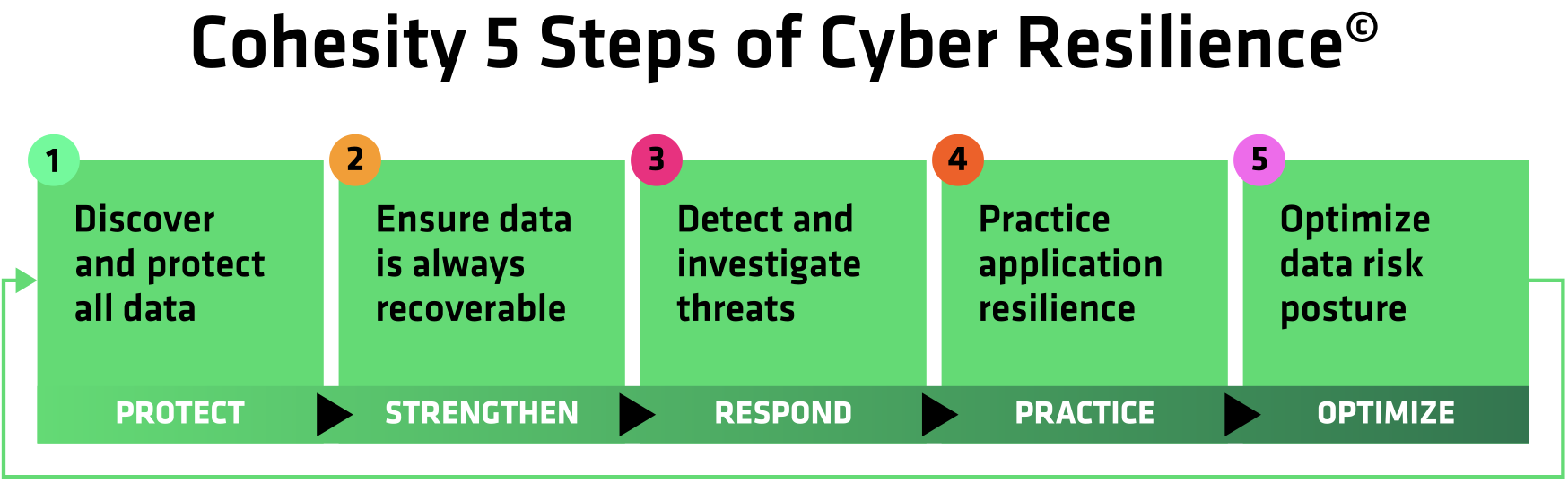
1. Discover and protect all data
1
KEY ACTIONS TO IMPLEMENT STEP ONE
1
Adopt a modern data platform that supports 1000+ data sources, including:
- Virtual machines (VMs)
- SaaS applications
- Databases
- NAS environments (unstructured data)
2
Make sure your platform runs across on-premises, cloud, and SaaS environments.
3
Simplify operations with an intuitive UI.
4
Get strong storage compression.
NOTABLE BENEFITS OF STEP ONE
Enhanced security
Reduced risk
Improved compliance and governance
Lower costs and improved ROI
Increased IT efficiency
2. Ensure data is always recoverable
1
KEY ACTIONS TO IMPLEMENT STEP TWO
1
Harden your platform by configuring powerful features like:
- Multifactor authentication (MFA)
- Immutability (so data can’t be altered or deleted)
- Role-based access control (RBAC)
- Separation of duties (dividing critical tasks among
different individuals)
2
Implement a cyber vault
NOTABLE BENEFITS OF STEP TWO
Faster and more secure recovery
Stronger protection against attacks
Audit readiness
Zero trust alignment
3. Detect and investigate threats
1
KEY ACTIONS TO IMPLEMENT STEP THREE
1
Be proactive by regularly scanning for threats in your backups. Think of this proactive threat scanning like practicing consistent hygiene. It’ll help you:
- Root out any changes as quickly as possible
- Identify malware or other vulnerabilities
2
NOTABLE BENEFITS OF STEP THREE
Early threat detection and mitigation
Backup integrity assurance
Faster incident recovery and reduced downtime
Shared context for IT and InfoSec teams
4. Practice application resilience
1
KEY ACTIONS TO IMPLEMENT STEP FOUR
1
Practice with orchestration and rehearsals
- Automate your response and recovery processes
- Conduct rehearsals to refine your response plans, including
how you sequence recovery for infrastructure, data, and
applications
2
Use a clean room
- Spin up a separate, secure environment for forensic analysis
- Identify and eradicate threats before restoring infrastructure,
data sources, and applications
3
Get expert support
NOTABLE BENEFITS OF STEP FOUR
Faster and safer recovery
Improved RTO
Lower risk of reinfection
Reduced disruption and financial risk
5. Optimize data risk posture
1
KEY ACTIONS TO IMPLEMENT STEP FIVE
1
Find out what data is where
- Scan your environment and assess what data is where and
what protection level it has. The whole class of tools with
DSPM makes this possible. - Understand what may be in your backup estate and make
sure it’s protected the right way with our full featured
integrations with some of the best vendors in the industry,
including Cyera and BigID.
2
Assess what may have been impacted in a breach or what may have happened in a case of data exfiltration
- Get the right coverage you need and reduce your risk with
the data classification built into our products. - Answer quickly when there’s an incident and lawyers ask:
What data was impacted? How sensitive is it? What’s our
risk? How many customers were impacted? What types of
records were affected?
NOTABLE BENEFITS OF STEP FIVE
Enhanced data visibility and classification
Proactive risk identification and mitigation